
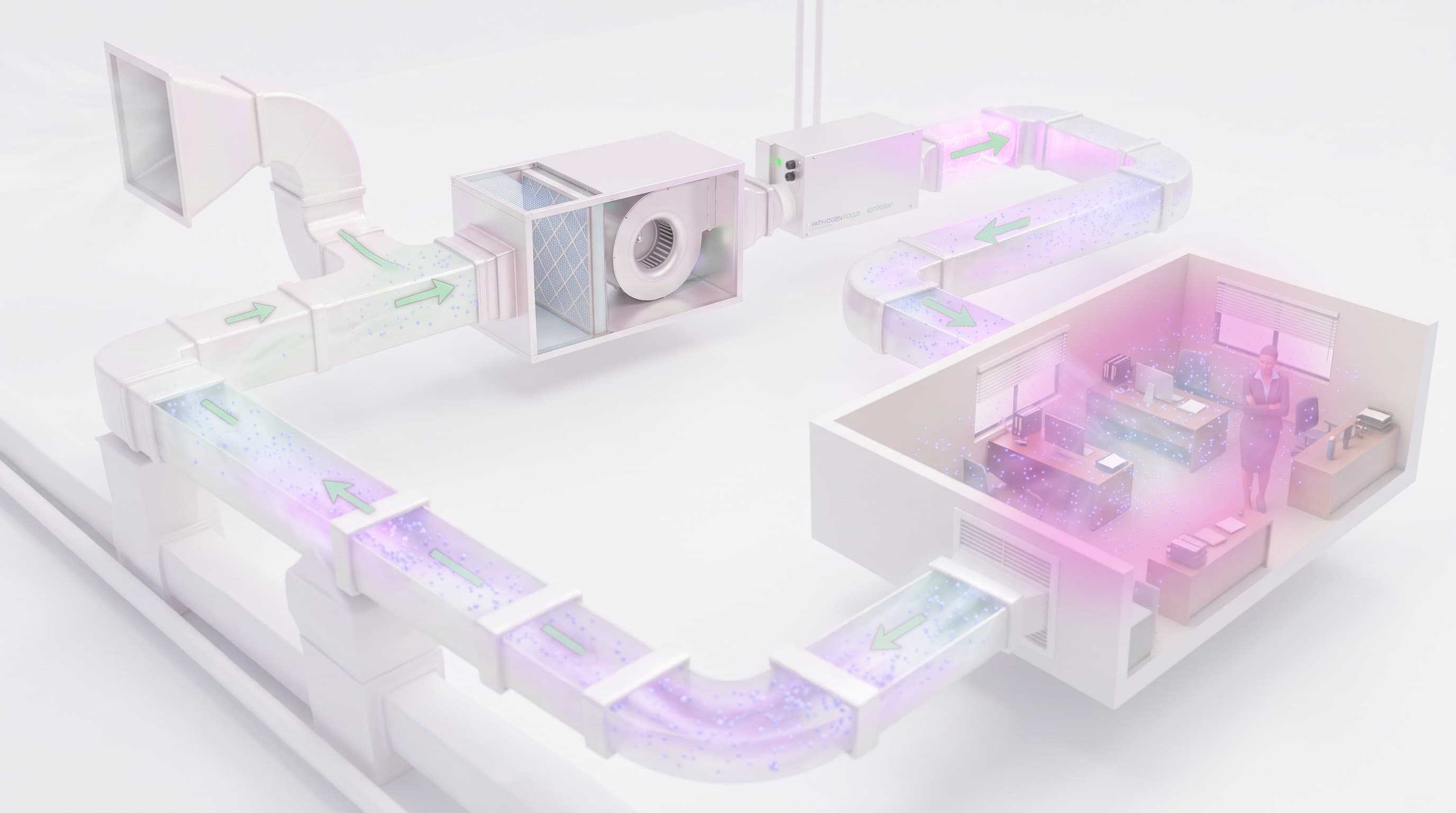
Our ADB systems provide continuous air and surface microbial treatment for your occupied facility.
Our PathogenFocus ADB systems use proprietary modulated dielectric barrier discharge cold-plasma technology to provide continuous microbial treatment for air and exposed surfaces in occupied facilities. Our technology can operate during your normal facility operations. In independent laboratory testing in a 2,640-cubic-foot chamber, our ADB technology reduced airborne SARS-CoV-2 by 99.9% in 30 seconds. Our systems use ambient air and electricity and require no added chemical treatment products during normal operation.
Deployed across 1,000+ U.S. installations since 2008
Airborne SARS-CoV-2 reduced in 30 seconds in our laboratory testing
Airborne SARS-CoV-2 reduced in 16 seconds in our laboratory testing
Chemical treatment products required for our normal operation
U.S. installations since 2008
Your facility has multiple pathways that can continuously introduce and move microbial contamination
Your sanitation program may include scheduled cleaning, filtration, ventilation, and other established controls, but microbial contamination can continue to enter and circulate through your facility between those events. People, products, equipment, packaging, incoming materials, process activity, and normal airflow can introduce or redistribute bacteria, viruses, fungi, and mold. We designed our ADB systems to add continuous microbial treatment to that environment. Depending on the application, we can integrate ADB into your existing HVAC system or use a standalone configuration to treat the occupied space during normal operations. Our systems support your broader sanitation and contamination-control program. They do not replace your established cleaning, sanitation, ventilation, filtration, or infection-control procedures.
Where our ADB systems fit into your operation
- Produce, meat, poultry and dairy processing
- Hatcheries and ingredient processing
- Controlled-environment agriculture
- Healthcare and long-term care
- Transportation and cold chain
- Commercial and municipal buildings
Certifications and compliance
- USDA National Organic Standards 7 CFR 205
- UL 2998 Zero Ozone verification (emissions threshold)
- CARB Certified, California ozone limits
- UL867 (ADB 7000-AF)
We engineer each ADB configuration around your facility volume, airflow, use, and treatment goals so the system matches how your operation actually runs.
Our ADB 7000 series
Six configurations for your facility
Every model uses the same MDBD cold-plasma core. We match the configuration to your airflow, space, and how the facility operates.
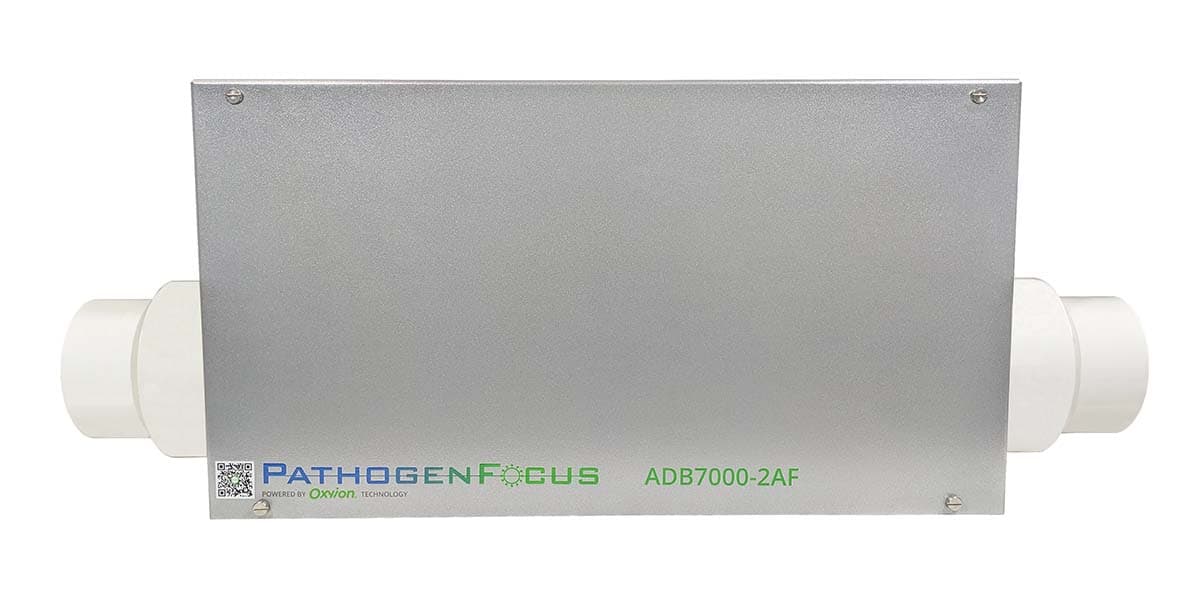
ADB 7000-AF
In-Duct / HVAC Integrated
Integrates with your existing HVAC system to distribute continuous cold-plasma treatment through facility airflow. Each unit is process-engineered for the space with pre-programmed factory settings.
Models: 1AF, 2AF, 4AF, 8AF
View specs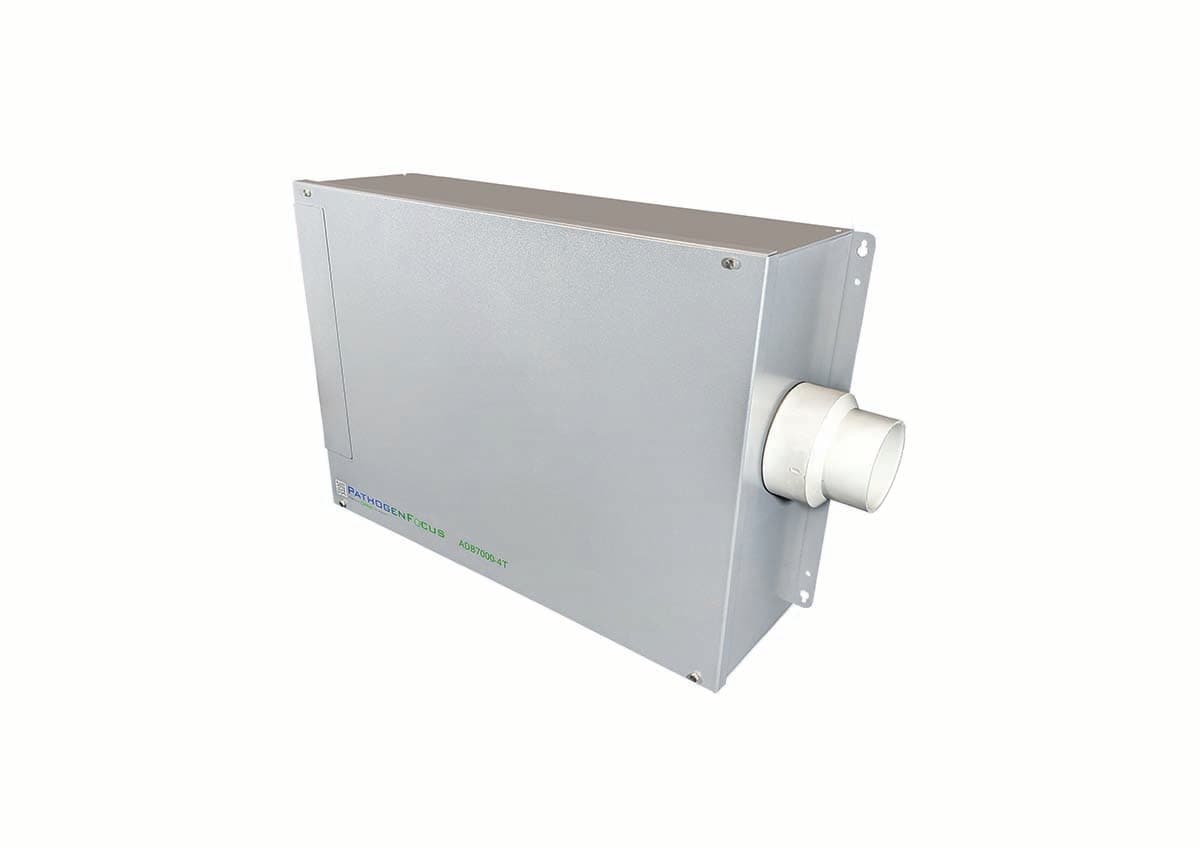
ADB 7000-T
Turbine (Standalone)
An integrated turbine draws air into the unit and distributes treatment independently of HVAC. Additional fans, piping, or ductwork may be required to distribute treatment evenly in the space.
Models: Four sizes
View specs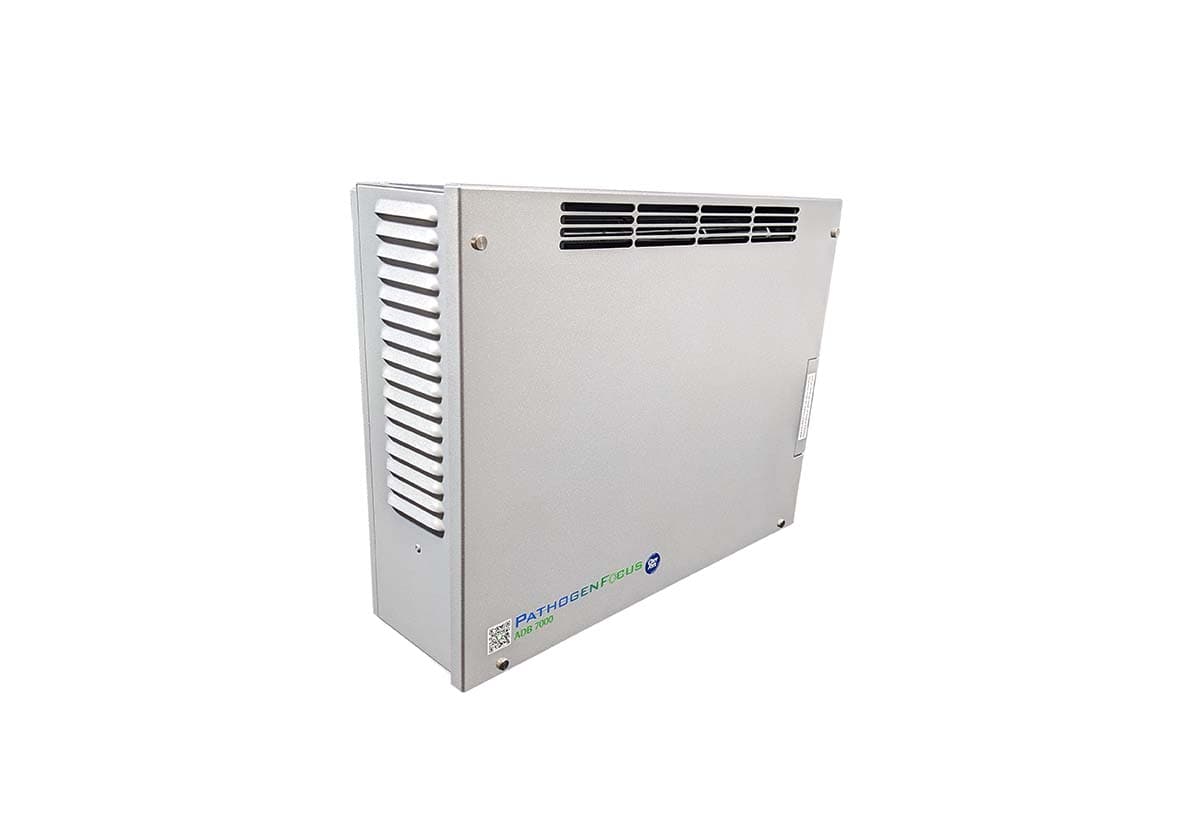
ADB 7000-W
Wall-Mounted
A lightweight wall unit that runs independently of HVAC for continuous treatment, with an included mounting bracket.
Power: 12 to 13 W
View specs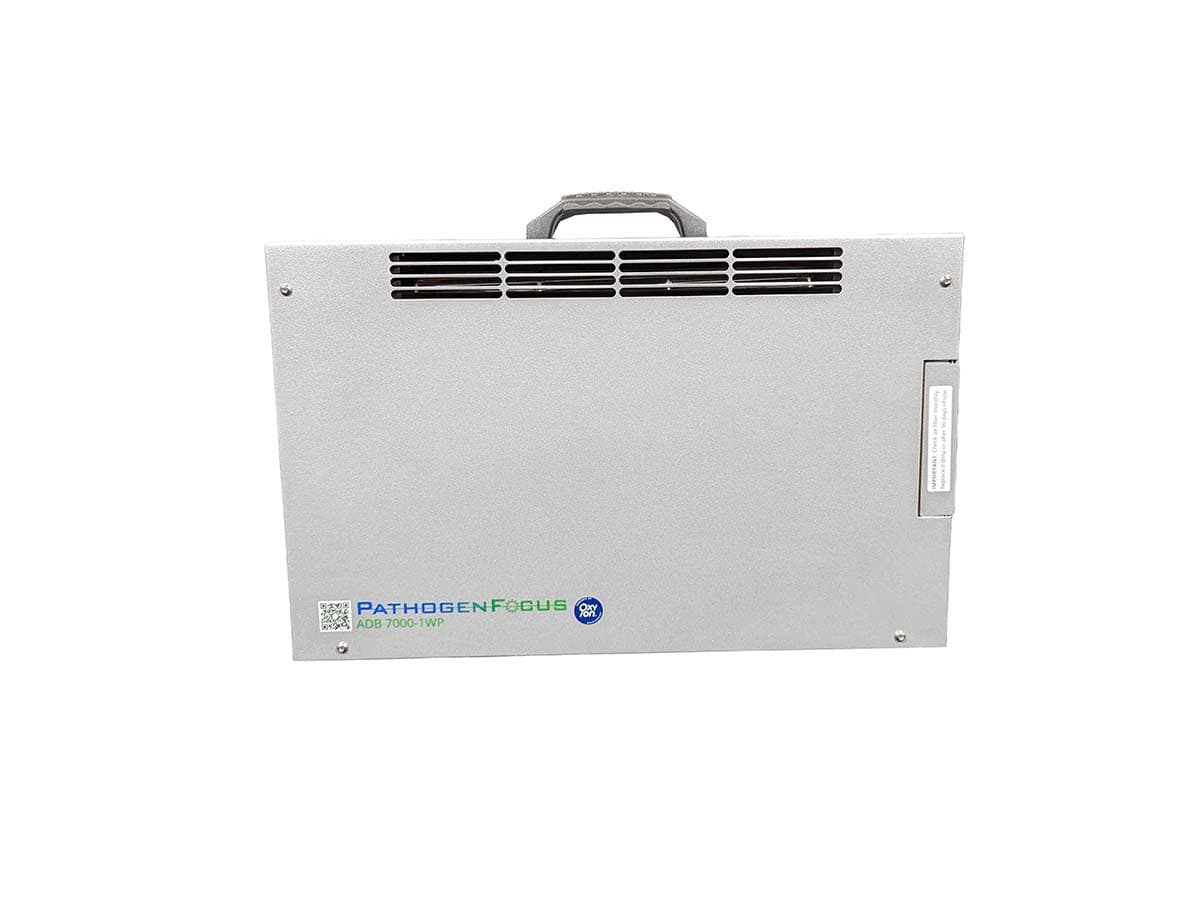
ADB 7000-WP
Wall-Mount / Portable
Mounts on a wall or moves where needed. Ships with a mounting plate and carrying handle, with fixed or selectable output.
Power: 12 to 13 W
View specs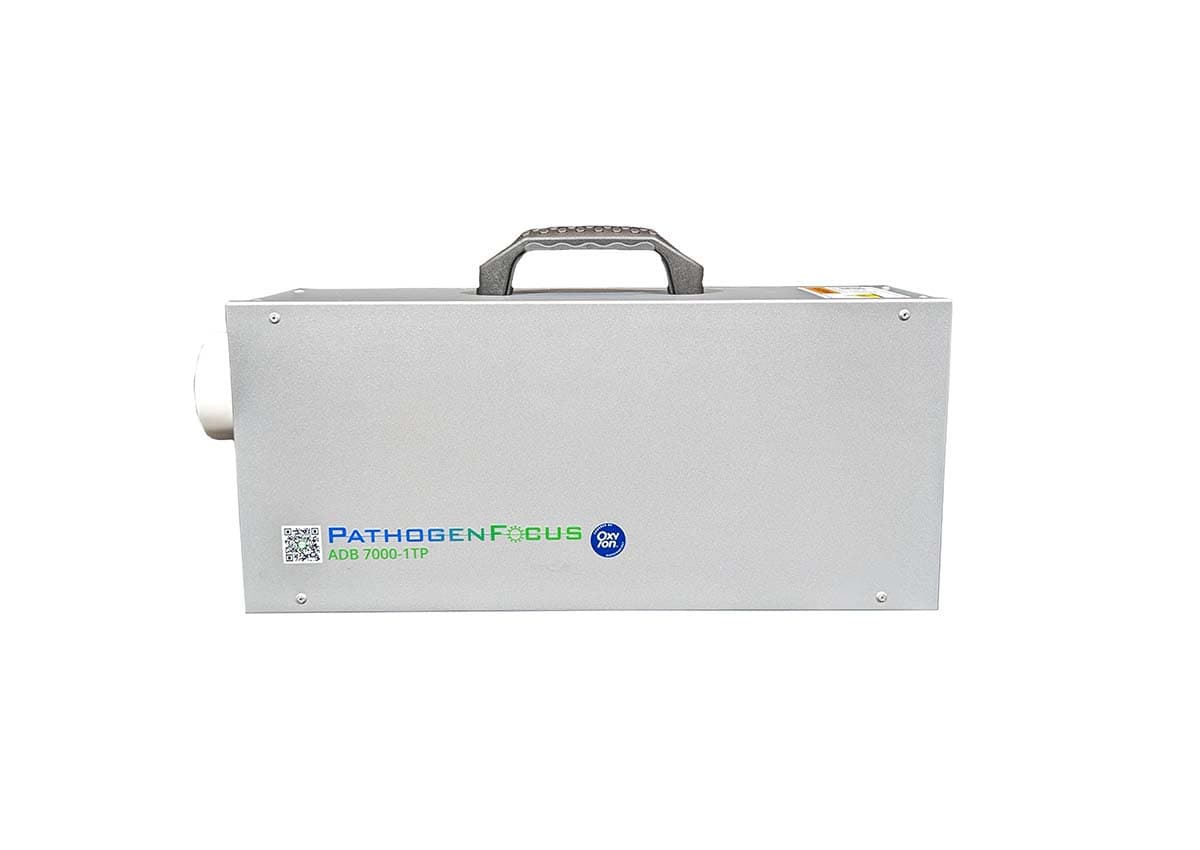
ADB 7000-P
Portable
Plug-and-play standalone treatment that runs independently of HVAC with pre-programmed factory settings for targeted spaces.
Power: 20 to 22 W
View specs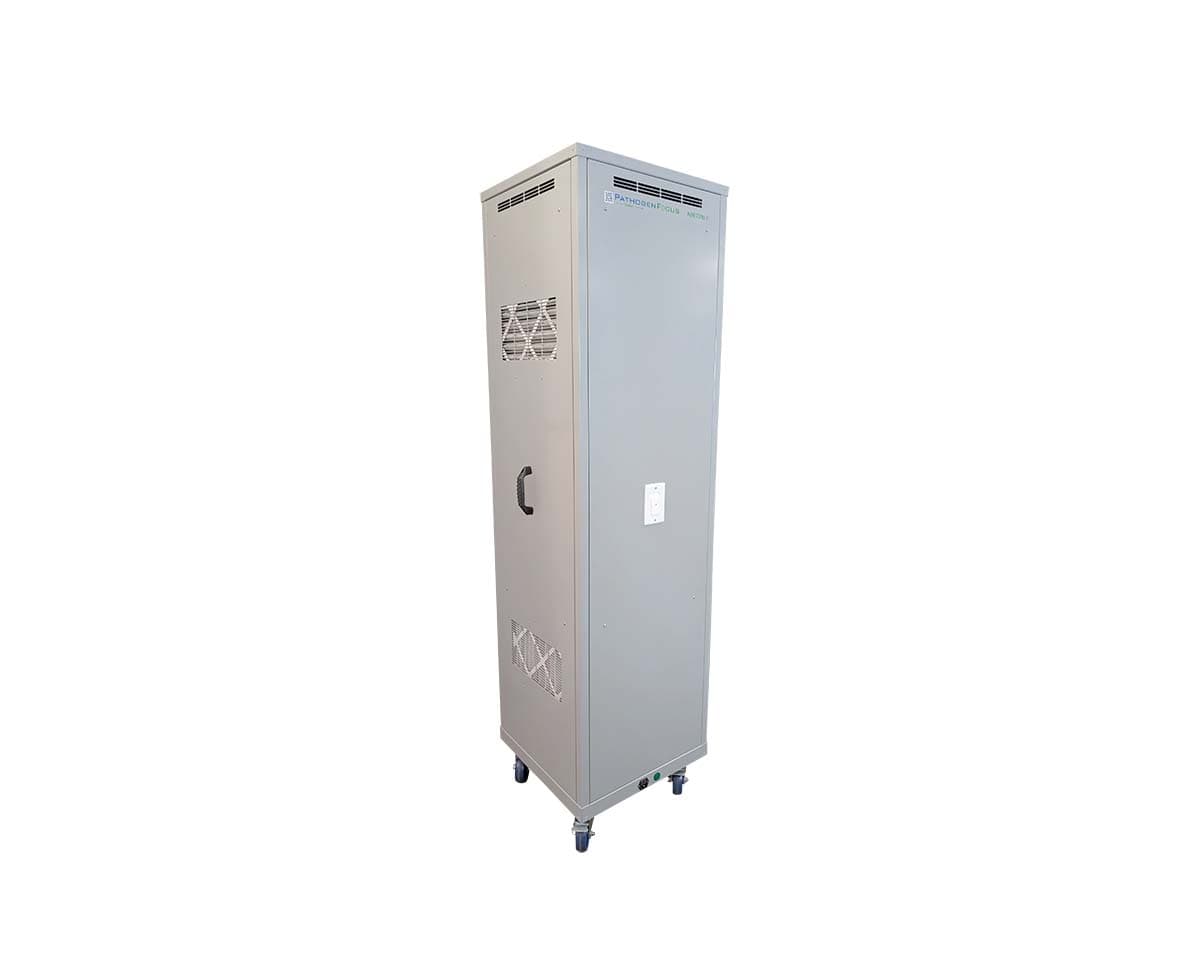
ADB 7000-MT
Mobile Tower
A high-output mobile unit on casters with four high-velocity fans distributing treatment at roughly 450 CFM, with six duty-cycle options.
Airflow: ~450 CFM
The ADB 7000-8MT is intended for rapid treatment in unoccupied enclosed spaces. The area must remain unoccupied until treatment has dissipated or been exhausted according to the approved procedure.
View specsOur system provides continuous treatment through your facility's airflow.
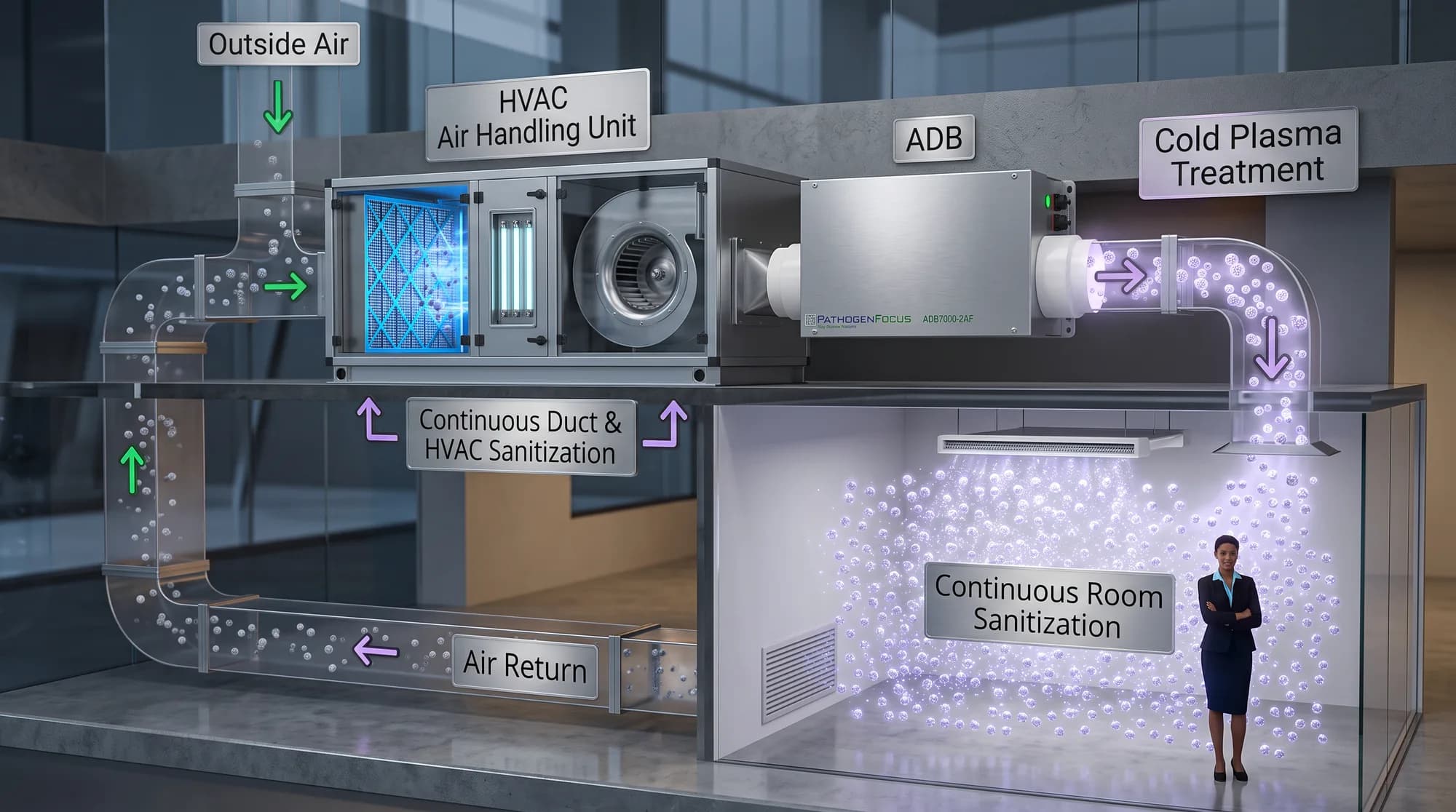
Our ADB system uses a controlled portion of your facility's ambient air to generate cold-plasma treatment inside the reaction chamber. We then use your existing HVAC airflow, or the airflow produced by a standalone ADB unit, to distribute that treatment throughout the occupied space. This allows the reactive compounds generated by our system to contact susceptible microorganisms suspended in the air and on exposed surfaces reached by the treated airflow.
Our ADB systems add continuous treatment without adding another manual chemical application process to your normal operation
Our systems can operate continuously without requiring your employees to repeatedly mix, spray, or fog chemical treatment products during normal operation. We engineer each system around your facility volume, airflow, use, and treatment goals so the configuration matches how your facility actually operates.
Air and exposed surfaces
We use your facility airflow to distribute treatment through the occupied space, allowing it to contact susceptible microorganisms suspended in the air and on exposed surfaces reached by that airflow.
Built for occupied spaces
We engineer most ADB configurations for continuous operation while your facility remains occupied and operating normally. The ADB 7000-8MT is intended for unoccupied enclosed spaces only.
No added chemical treatment products
Our ADB systems use ambient air and electricity as their primary operating inputs, so your employees do not have to mix, spray, or fog chemical disinfectants as part of normal ADB operation.
Rapid laboratory-documented reductions
Independent laboratory testing in a 2,640-cubic-foot chamber documented a 90 percent reduction in airborne SARS-CoV-2 after 16 seconds and a 99.9 percent reduction after 30 seconds using our ADB technology. Comparative tests under the same conditions reported faster reductions than ionization, photocatalytic oxidation, and UVC.
Certifications and standards
We maintain the certifications, verifications, and standards documentation applicable to each ADB configuration, including UL 2998 Zero Ozone verification for applicable systems, CARB certification for the ADB 7000 series, USDA National Organic Standards registration for listed product types, and UL867 for the applicable ADB 7000-AF series.
Operating inputs
Our systems do not require chemical treatment consumables for routine operation. Depending on the ADB model, filters, reaction chambers, and other maintenance components are inspected, serviced, cleaned, or replaced according to the approved service schedule.
VOC and ethylene mitigation
Our published materials report mitigation of volatile organic compounds, including formaldehyde, toluene, and benzene, and ethylene reduction tied to crop and shelf-life studies where those study results are cited.
Scalable configurations
We offer in-duct, standalone, wall-mounted, portable, and mobile-tower configurations so we can match the ADB system to your HVAC design, room layout, facility volume, airflow, and treatment objectives.
No UV lamps
Our ADB systems generate treatment through modulated dielectric barrier discharge cold plasma and do not use ultraviolet lamps as the treatment mechanism, so there are no UV lamps to replace, shield, or maintain as part of lamp-specific upkeep.
How our ADB technology performed in comparative laboratory testing
In an independent third-party comparison conducted in a 2,640-cubic-foot chamber, our MDBD cold-plasma technology achieved a reported 7.74-log airborne reduction after one minute. The same testing compared our system with bipolar ionization, photocatalytic oxidation, and UVC technologies under the defined laboratory conditions shown below. Real-world results vary based on the facility, existing bioburden, target organisms, airflow, system design, and operating conditions.
- 7.74-log reduction (99.99998%) in comparative airborne testing after one minute in a 2,640-cubic-foot chamber
- 7.89-log surface bacteria reduction reported in 30-minute comparison testing
- We distribute treatment through your facility airflow so reactive compounds can contact air and exposed surfaces reached by that airflow
Comparative airborne reduction in one minute
2,640 ft³ chamber, third-party labIndependent third-party comparison in a 2,640-cubic-foot chamber after one minute. PathogenFocus MDBD achieved a 7.74-log reduction, reported as 99.99998%. Real-world results vary with facility conditions. Bars use a perceptual scale for legibility.
How our ADB system creates and distributes cold-plasma treatment
Our proprietary modulated dielectric barrier discharge system creates non-thermal cold plasma inside our ADB reaction chamber. We then use your facility's HVAC airflow or the airflow from a standalone unit to distribute that treatment continuously through the occupied space.
Capture
Ambient air from your facility enters our ADB reaction chamber, providing the operating medium we use to generate the treatment. Our systems do not require added chemical treatment products for this process.
Energize
We use controlled, high-frequency electrical pulses inside our reaction chamber to create non-thermal cold plasma, generating reactive oxygen compounds and peroxides.
Disperse
We distribute the reactive species generated by our system, including gas-phase hydrogen peroxide, through your HVAC system or the standalone unit fan into the treatment space.
Treat and revert
The reactive compounds generated by our system contact susceptible airborne and surface microorganisms. Unreacted molecules return to water vapor and non-reactive oxygen according to PathogenFocus technical materials.
Reactive molecules generated by our system that do not react return to water vapor and non-reactive oxygen according to PathogenFocus technical materials. Our applicable systems are engineered for occupied spaces when installed, configured, operated, and maintained according to approved manufacturer instructions.
We configure our ADB technology for a wide range of facility environments
We match our ADB configuration to how your facility operates, whether that means HVAC integration, standalone treatment, or a mobile application. Our systems add continuous microbial treatment during normal operations as part of your broader contamination-control program.
Food & Beverage Processing
We integrate ADB into produce, meat, poultry, dairy, hatchery, and ingredient-processing environments to support your facility's broader sanitation and food-safety program. Any organism-specific reduction or shelf-life claim remains tied to the applicable study.
Healthcare & Long-Term Care
We can deploy ADB in occupied rooms, corridors, waiting areas, and shared spaces to add continuous microbial treatment alongside your existing environmental cleaning, ventilation, and infection-prevention program.
Education
We configure ADB for classrooms, cafeterias, gyms, and dorms so your facility can receive continuous treatment during normal occupancy without interrupting the school day.
Controlled-Environment Agriculture
We address mold, fungi, decay microorganisms, and ethylene in livestock, horticulture, and controlled-environment agriculture facilities. Crop-specific study data applies where cited.
Transportation & Cold Chain
We deploy ADB in trucks, containers, transit vehicles, and school buses where confined airflow and continuous operation support your operational requirements.
Commercial & Municipal Buildings
We add continuous treatment in offices, meeting rooms, and public buildings as part of your facility's broader contamination-control program between scheduled cleaning events.
We can add continuous microbial treatment between the sanitation and cleaning procedures already built into your operation.
Your facility may already use scheduled cleaning, ventilation, filtration, sanitation procedures, and other contamination-control measures. Our ADB systems add an automated treatment process that can continue operating between those scheduled activities by distributing treatment through your building's normal air circulation while your operation continues.
“After an extensive review of over 40 research studies, PathogenFocus ADB’s near-instantaneous inactivation of pathogens in breathing-zone air makes this technology an innovative and important asset to any facility with stringent biosafety requirements.”
Mark H. Ereth, MD
Emeritus Professor, Mayo Clinic College of Medicine and Science
Review the ADB configuration for your facility
Tell us how your facility operates, including the space being treated, cubic volume, HVAC airflow, occupancy, process conditions, and your microbial-control objectives. Our team will review the application with you, determine which ADB configuration is appropriate for the space, and provide the technical documentation available for that system.